
AI Transparency Government Decision Making: California Passes 30 Oversight Bills Ahead of September Deadline
State and global regulators are enforcing unprecedented disclosure rules on automated decision systems across the public sector. California's passage of 30 AI oversight bills alongside international mandates requires public agencies to audit procurement and implement explainable algorithmic controls immediately.
Published by
APEX AI Guardrails Editorial Team
September 4, 2026
Reading time
6
minutes
Legislative momentum around AI transparency government decision making reached a turning point on September 4, 2026, as lawmakers accelerated enforcement against black-box public sector algorithms. Under major state initiatives, public agencies face strict disclosure and algorithmic accountability rules for automated administrative workflows. For public sector IT, legal, and compliance executives, these rapid developments require an immediate transition toward auditable data provenance, mandatory human-in-the-loop controls, and rigorous vendor oversight.
How do California's 30 new AI bills affect automated decision-making in public agencies?
California's 30 AI bills require state and local agencies to enforce transparent algorithmic reporting, provenance watermarking, and continuous bias auditing across automated systems. Under pending statutory provisions, agencies using automated decision-making systems (ADMS) for public benefits, personnel determinations, or administrative adjudications must provide plain-language explanations, record comprehensive audit trails, and maintain human intervention protocols, establishing a de facto standard aligned with the NIST AI RMF for jurisdictions nationwide.
Legislative Momentum: California Enacts Sweeping Standards for AI Transparency Government Decision Making
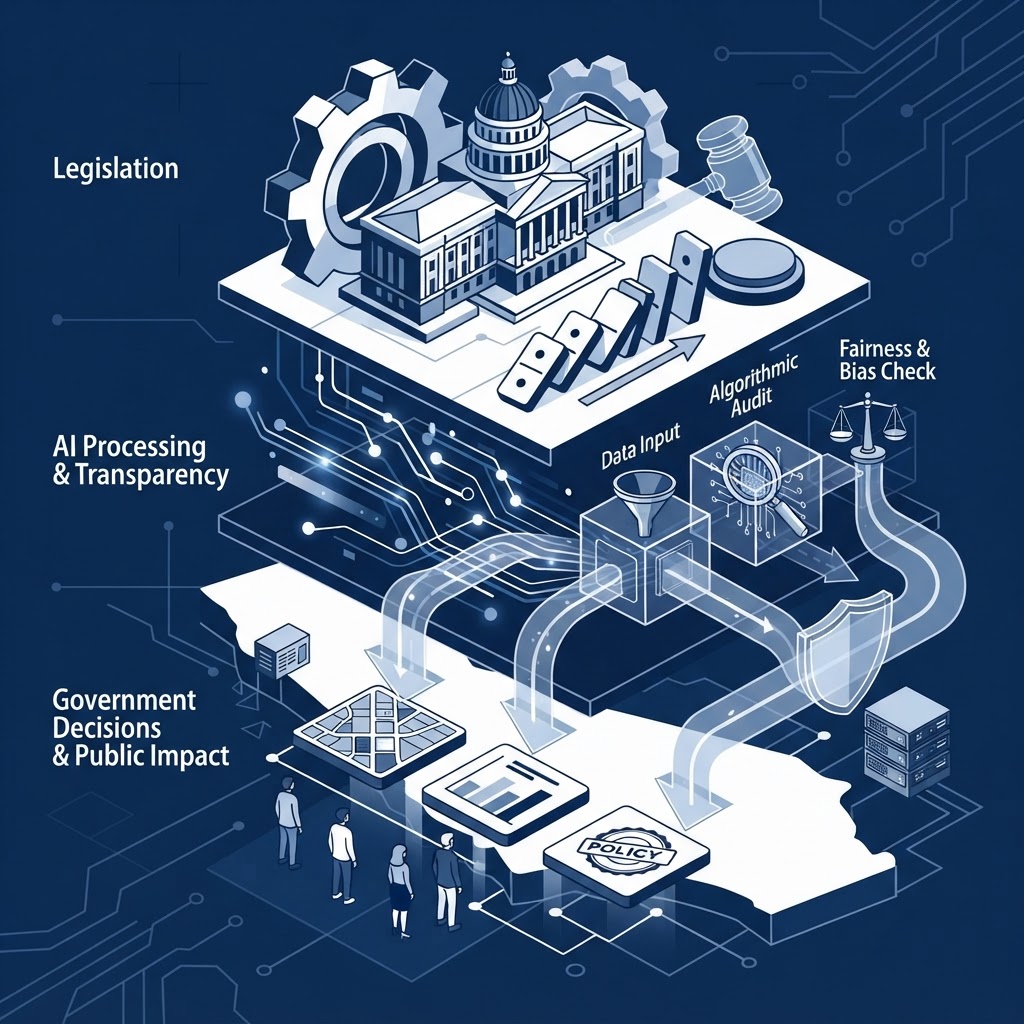
State-level oversight of algorithmic governance experienced a historic shift as California legislators completed their session by approving an extensive suite of statutory controls. According to the AI Legislative Update: September 4, 2026, California lawmakers concluded their 2026 legislative calendar by passing 30 separate AI-related bills, forwarding sweeping governance and automated disclosure mandates to Governor Gavin Newsom ahead of the statutory September 30 enactment deadline. These legislative proposals directly target automated decision-making systems (ADMS) deployed across municipal, county, and state administrations.
Rather than permitting self-certified technical evaluations, the pending statutory language obligates public sector bodies to disclose when machine-learning models evaluate citizen benefits, civil service applications, licensing verifications, and regulatory citations. The bills establish standardized requirements for algorithmic impact assessments, aligning statutory enforcement with federal benchmarks like the NIST AI RMF GOVERN 1.2 function and OMB Memo M-24-10. Agency chief information officers must now document training data provenance, prohibit unverified scoring models, and maintain verifiable explainability records.
Because California frequently establishes de facto standards for federal and interstate markets, enterprise software vendors must rework underlying model pipelines or face disqualification from state contracts.
Which compliance milestones must state agencies track under the newly enacted Article 50 transparency rules?
Public agencies tracking international benchmarks must comply with clear interaction disclosures and synthetic media notifications. Under Article 50 statutory provisions, organizations deploying customer-facing AI agents or automated workflow tools must explicitly inform users of synthetic engagement. State organizations must conduct algorithmic lineage audits, implement machine-readable provenance watermarking, and establish verifiable risk logging by scheduled statutory deadlines to maintain alignment with evolving international interoperability requirements.
Global Enforcement and Content Watermarking Shape AI Transparency Government Decision Making
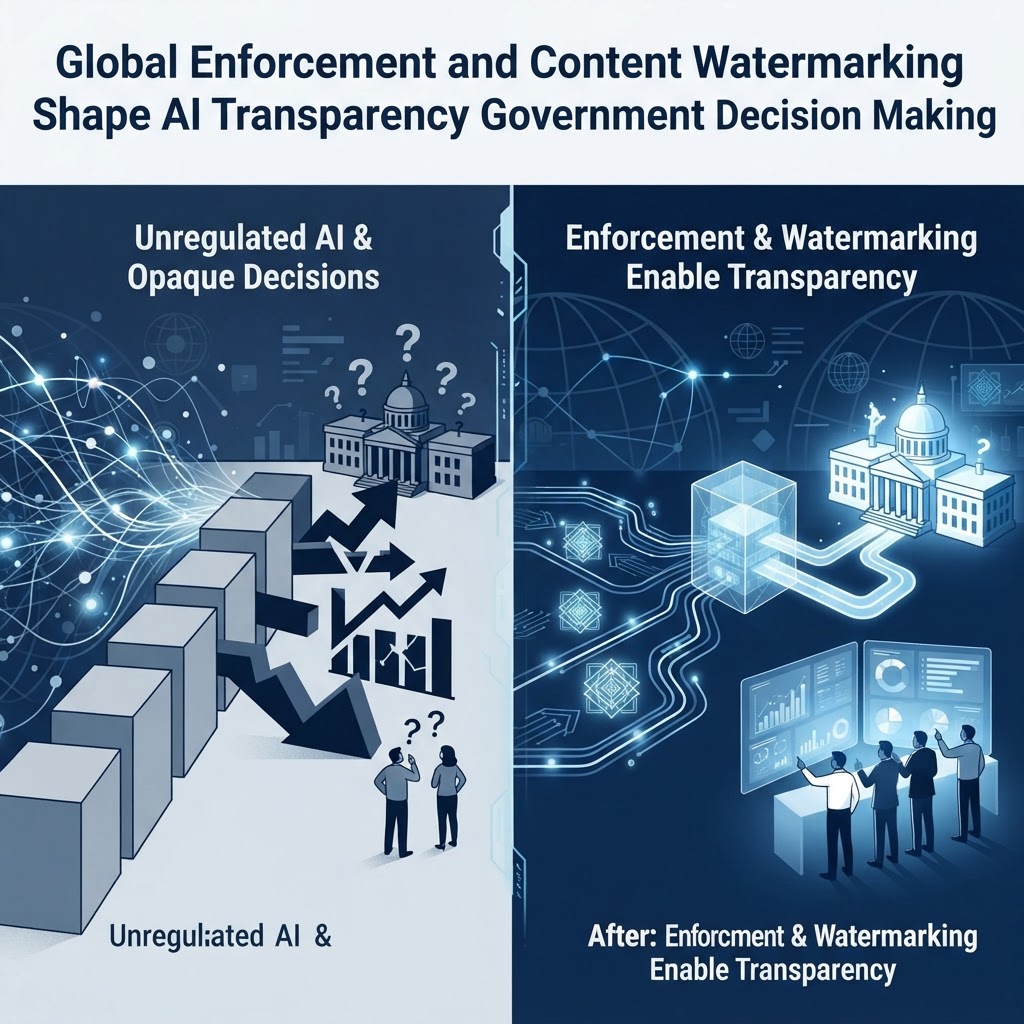
Parallel regulatory activity across international jurisdictions is reinforcing domestic transparency demands on public authorities. As detailed in legal analysis regarding the AI Act: transparency obligations and the AI Omnibus Regulation, Article 50 transparency obligations took effect alongside targeted revisions from the AI Omnibus Regulation, mandating explicit disclosure when individuals interact with automated systems or consume synthetic content. Concurrently, administrative observers report intensified scrutiny on institutional tracking and monitoring workflows.
Analysis highlighted in TLT's AI Brief: September 2026 reveals that regulators and public bodies are navigating heightened scrutiny regarding automated workplace monitoring technologies and requirements for synthetic content provenance. For American public agencies, these cross-border frameworks eliminate informal compliance buffers. Whether deploying natural language processing for administrative intake or machine learning for workforce capacity planning, public institutions must guarantee algorithmic explainability.
Public bodies can no longer mask system logic beneath proprietary intellectual property claims. Instead, data controllers must log system instructions, enforce AI DLP parameters against confidential citizen data exfiltration, and establish auditable verification mechanisms that satisfy independent third-party inquiries.
Operational Friction and Governance Realities for Municipal, County, and State Agencies
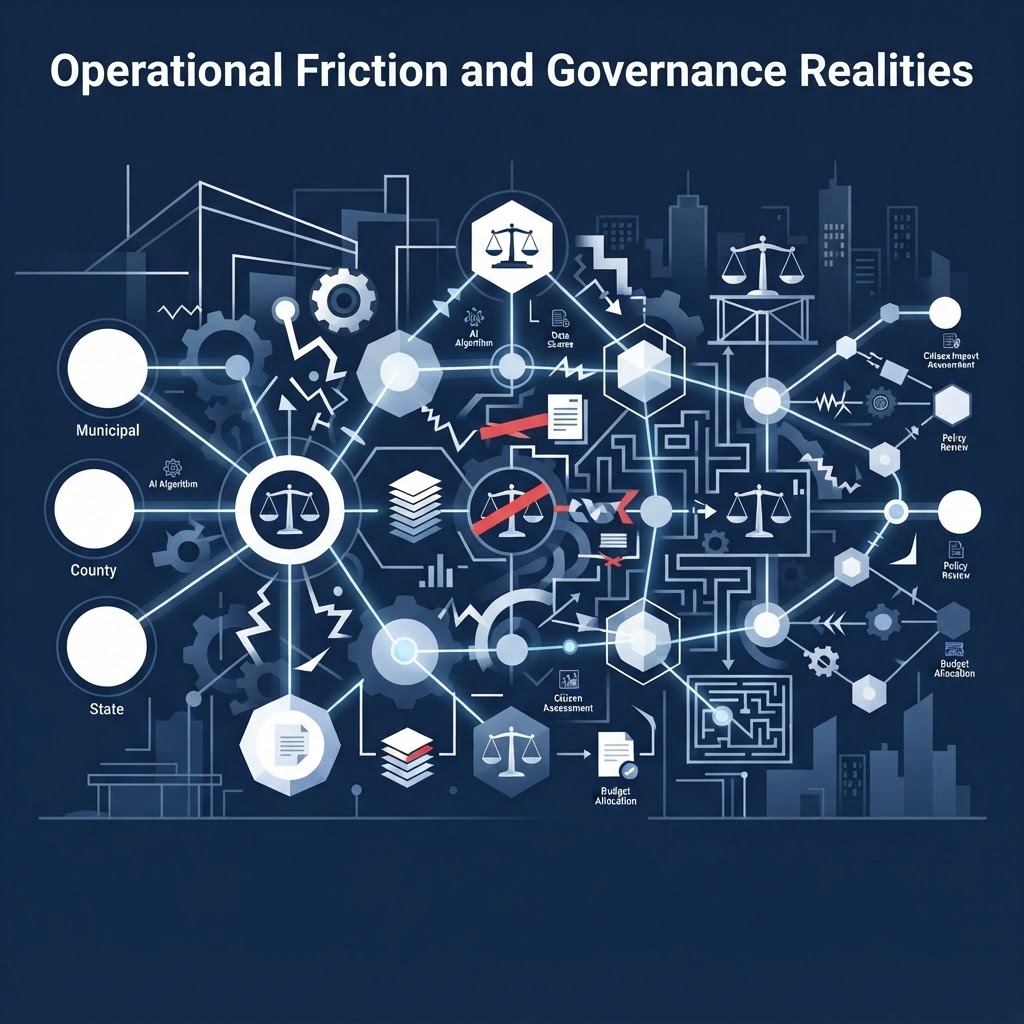
The rapid codification of algorithmic accountability standards introduces substantial operational challenges for state, local, and education (SLED) enterprise architectures. Local governments frequently rely on commercial off-the-shelf software containing embedded, unmapped analytical routines—commonly known as shadow AI. Without mature discovery practices, these hidden algorithmic layers expose public institutions to administrative legal appeals and civil rights challenges if citizens experience adverse eligibility determinations.
SLED procurement departments must immediately overhaul legacy contractual solicitations, demanding vendor indemnification, deterministic explainability artifacts, and concrete telemetry data. Commercial suppliers are already modifying architectures to retain public sector business; for instance, industry disclosures show Microsoft expands AI oversight in 2026 transparency report by revising internal governance standards and introducing automated monitoring controls for agentic deployments. Public agencies must replicate these rigorous internal safeguards by instituting institutional AI acceptable use policies, establishing formal AI governance charters, and training caseworkers to challenge, override, or corroborate algorithmic outputs rather than rubber-stamping synthetic recommendations.
Actionable Modernization Priorities for Public Sector Technology Directors
- →Inventory all public-facing automated decision-making systems to identify scoring mechanisms impacting constituent benefits, civil service evaluations, or enforcement allocations.
- →Update procurement contracts to require vendors to deliver continuous algorithmic impact assessments, explainability telemetry, and compliance with the NIST AI RMF.
- →Deploy robust AI DLP and content filtering controls to prevent unauthorized ingestion of protected citizen records into public or multi-tenant commercial models.
- →Form an interdisciplinary AI governance council comprising IT security, legal counsel, and program directors to review and sign off on high-risk algorithmic deployments.
- →Institute mandatory human-in-the-loop safeguards requiring documented caseworker reviews prior to finalizing any automated adverse administrative decision.
- →Establish verifiable synthetic media provenance markers and public disclosures across all agency communication channels and automated self-service portals.
What legal penalties and administrative liabilities do agencies face for failing to disclose automated decisions?
Failure to disclose automated decision-making logic exposes public bodies to administrative legal challenges, civil rights lawsuits, and revoked program funding under due process and anti-discrimination statutes. Unexplained algorithmic denials of benefits or employment can lead to mandatory court-ordered system injunctions, substantial legal damages, and comprehensive external compliance monitorships that significantly disrupt core public service delivery.
The escalating legislative push across state capitals and international regulatory bodies confirms that AI transparency government decision making is now a mandatory operating standard rather than an aspirational guideline. State and local administrations must proactively dismantle opaque automated processes, demand comprehensive explainability from software vendors, and institutionalize resilient governance oversight. By embedding continuous transparency, rigorous data auditing, and human intervention mechanisms today, public leaders can protect institutional integrity and deliver fair, accountable digital services to the public.
Tagged
About APEX AI Guardrails: We publish expert AI news and governance insights updated 4× daily. Our editorial team consists of retired government IT professionals, AI governance specialists, and compliance experts with deep experience in local government operations.
Related Articles
Government AI
AI Hallucination Risk Governance in SLED: September 4 Disciplinary Actions and New Deployer Liability
September 4, 2026
AI Governance
AI Deepfake Disinformation Threats: Global Governments Ramp Up Oversight in September 2026
September 4, 2026
Government AI
Public Sector Algorithmic Accountability: New Balochistan Civil Service AI Plan Sparks Global Governance Warnings
September 4, 2026