
AI Hallucination Risk Governance in SLED: September 4 Disciplinary Actions and New Deployer Liability
Following landmark disciplinary bans and multi-state enforcement actions on September 4, 2026, public sector agencies face direct liability for unverified generative outputs. State and local IT leaders must implement strict verification gates, safety logging, and procurement controls across all automated workflows.
Published by
APEX AI Guardrails Editorial Team
September 4, 2026
Reading time
6
minutes
Managing AI hallucination risk governance transitioned from a theoretical alignment exercise to an immediate legal imperative on September 4, 2026, as judicial authorities and state regulators launched formal disciplinary crackdowns on unverified generative outputs. Following a statutory watchdog warning after 42 reports of generative AI misuse, tribunal administrators instituted permanent professional bans that expose the perils of unvetted large language model usage. For state and local government enterprise leaders, these enforcement precedents mandate immediate operational guardrails to prevent agency deployers from bearing direct legal responsibility for automated misinformation.
Can public sector agencies face legal liability if a generative AI tool outputs hallucinated citations or data?
Yes. Recent 2026 administrative inquiries and common-law tort actions demonstrate that deployers face aiding-and-abetting liability when automated tools distribute unvetted, hallucinated outputs that trigger administrative or legal injuries. Under guidance expanding on the NIST AI RMF GOVERN and MEASURE functions, failing to implement human-in-the-loop review and audit logging constitutes operational negligence, stripping public sector departments of standard sovereign or qualified immunity protections in regulatory enforcement proceedings.
Professional Tribunal Strikes and Strict AI Hallucination Risk Governance Precedents
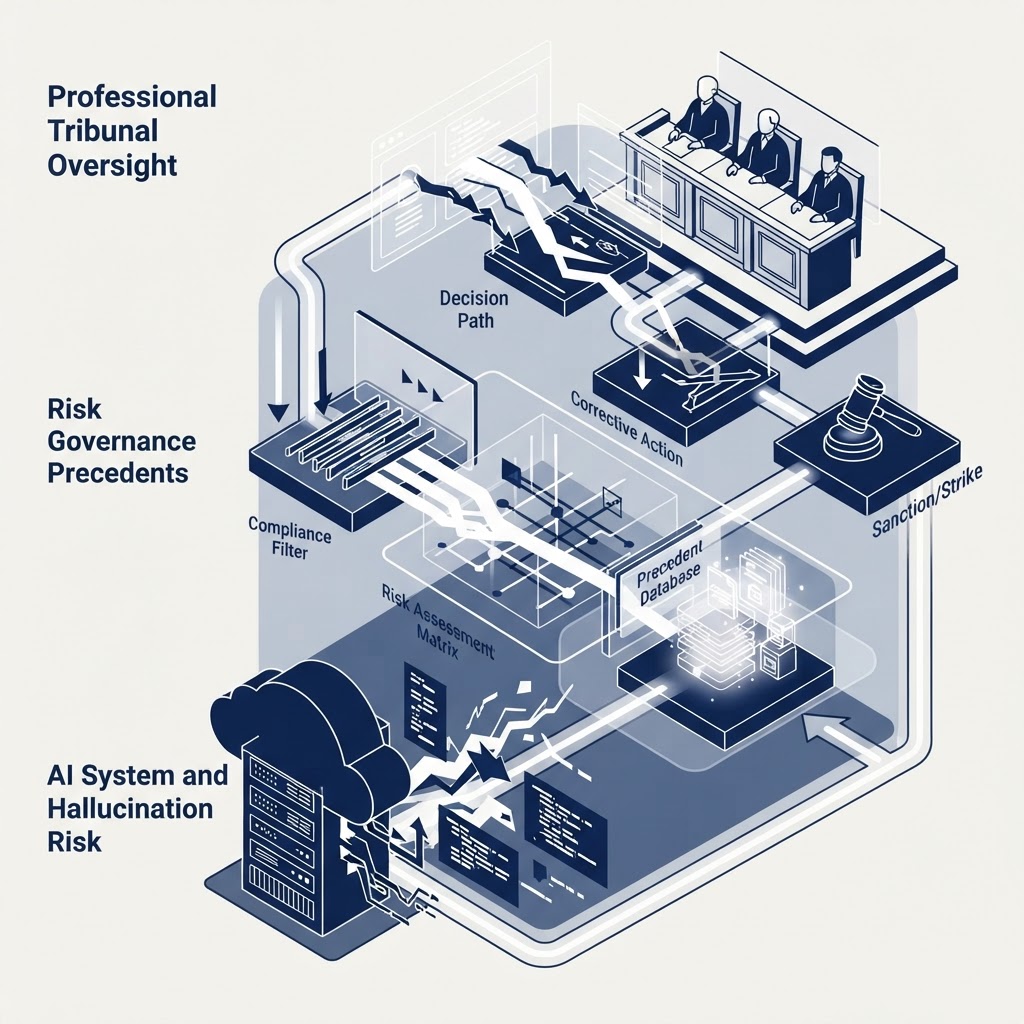
Administrative oversight reached an unprecedented turning point when a regulatory tribunal formally issued a career strike-off against a practitioner on September 4, 2026. According to reporting from City A.M., a lawyer was struck off for presenting fabricated AI-hallucinated case citations within formal proceedings, marking a decisive shift after statutory bodies logged 42 separate incidents of synthetic evidence submission. This landmark adjudication underscores that downstream enterprise deployers, rather than frontier foundation model developers, bear full professional accountability for verifying synthetic facts.
Government counsel and court administrative offices can no longer treat large language model fabrications as harmless software bugs; instead, they represent actionable failures of professional competence. As federal transparency demands escalate—illustrated by litigation documented by AI Governance News where Protect Democracy sued four federal agencies to force disclosure of hidden pre-release safety testing evaluation standards—public institutions face heightened scrutiny over how they validate automated outputs prior to execution.
What compliance mechanisms stop generative AI hallucinations from entering government court filings and public records?
Agencies must deploy deterministic Retrieval-Augmented Generation (RAG) coupled with mandatory human-in-the-loop verification gates. System architectures require mathematical citation checks that cross-reference model outputs against verified document repositories before publishing records. Furthermore, administrative directives must enforce continuous audit logs and AI DLP protections, guaranteeing that automated systems cannot generate unverified claims or alter official filings without human sign-off.
State Regulatory Probes and Deployer Accountability Under AI Hallucination Risk Governance
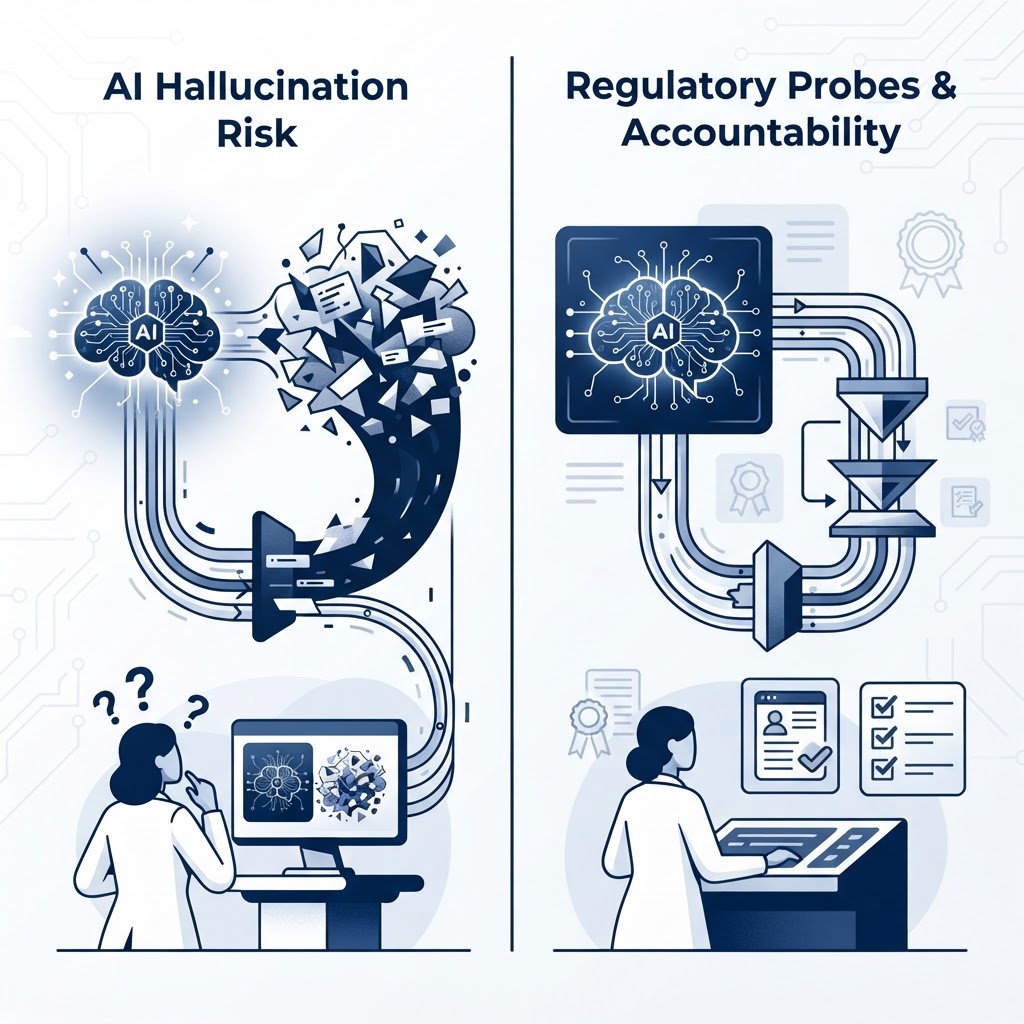
Beyond professional licensing boards, state executive agencies are aggressively targeting generative oversights through consumer protection and regulatory statutes. As reported in AI Governance Weekly, the Alabama Attorney General initiated an administrative inquiry evaluating agentic safety logging and vendor oversight mechanisms, while 30 active complaints test deployer aiding-and-abetting liability for automated systemic harms. This aggressive legal theory posits that when public or regulated entities deploy unmonitored autonomous agents without continuous verification protocols, the agency itself shares joint culpability for resulting administrative injuries or due process deprivations.
Consequently, responsible AI standards can no longer operate as optional internal guidelines. Instead, chief legal officers and state agency directors must enforce verifiable algorithmic accountability controls, aligning their system telemetry with the NIST AI RMF to document real-time risk mitigations across public-facing enterprise deployments.
Operational Friction and Legal Exposures Facing State, County, and Municipal IT Departments
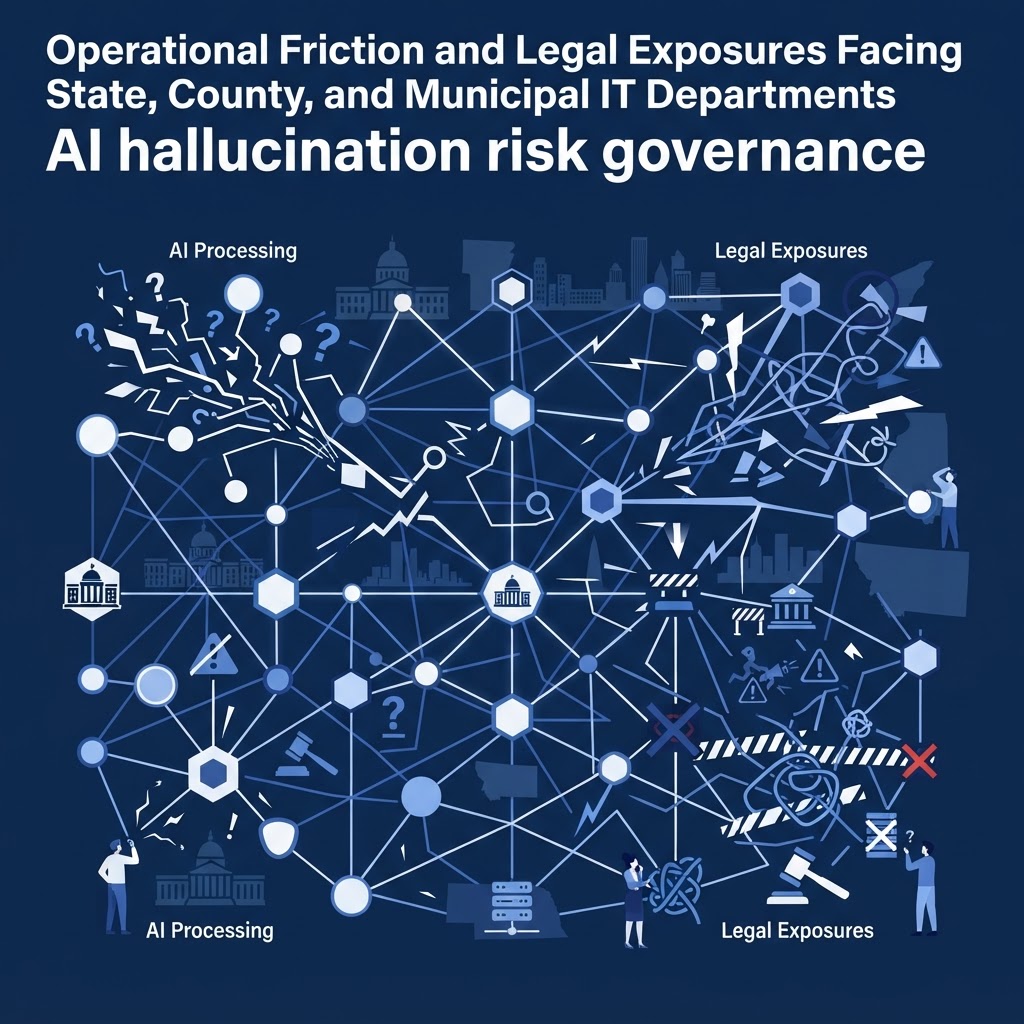
The operational burden on municipal and county procurement teams intensified dramatically as statehouses codified these oversight expectations into formal statute. As detailed by the Transparency Coalition, California lawmakers concluded their 2026 legislative session by advancing 30 comprehensive AI-related bills to the governor’s desk for signature by September 30. This landmark package establishes rigorous requirements for automated decision system auditing, training data provenance transparency, and algorithmic safety logging for entities operating within the state.
For local government administrators, municipal procurement frameworks must immediately pivot away from off-the-shelf, uncalibrated conversational models toward purpose-built systems with strict guardrails. County IT directors must eliminate shadow AI across agency workstations, updating internal AI acceptable use policy rules and deploying real-time AI DLP tools to prevent staff from using unmonitored commercial generative platforms for administrative casework or constituent inquiries.
Actionable Protocols for Government Technology and Legal Teams
- →Mandate verifiable Retrieval-Augmented Generation (RAG) architectures with strict ground-truth sourcing across all public assistance, judicial, and constituent portals.
- →Establish an agency-wide AI governance charter that explicitly assigns institutional liability and requires human-in-the-loop sign-off on public-facing outputs.
- →Revise IT procurement compliance checklists to demand that software vendors deliver exportable, tamper-evident safety logs and continuous drift monitoring.
- →Implement automated AI DLP filters across municipal networks to isolate shadow AI tools and intercept unverified synthetic text before publication.
- →Update internal employee acceptable use guidelines to delineate strict disciplinary repercussions for submitting automated outputs without external factual cross-referencing.
What penalties do public agencies risk by deploying unmonitored generative AI assistants?
Deploying unmonitored generative tools exposes agencies to civil rights lawsuits, judicial sanctions, state attorney general civil investigative demands, and severe reputational damage. In cases involving public welfare determinations or legal casework, fabricated synthetic data can violate statutory due process mandates, invalidating municipal decisions, sparking civil aiding-and-abetting claims, and disqualifying jurisdictions from federal modernization grant opportunities.
The decisive disciplinary actions and regulatory investigations finalized on September 4 prove that AI hallucination risk governance has evolved into an essential safeguard for public administration. As state legislatures mandate strict algorithmic transparency and prosecutors test deployer liability, local governments can no longer rely on commercial vendor disclaimers to shield themselves from operational harm. Public sector leadership must immediately formalize strict verification gates, audit regimes, and oversight charters to maintain civic trust and safeguard their organizations against systemic legal exposure.
Tagged
About APEX AI Guardrails: We publish expert AI news and governance insights updated 4× daily. Our editorial team consists of retired government IT professionals, AI governance specialists, and compliance experts with deep experience in local government operations.
Related Articles
AI Governance
AI Deepfake Disinformation Threats: Global Governments Ramp Up Oversight in September 2026
September 4, 2026
Government AI
AI Transparency Government Decision Making: California Passes 30 Oversight Bills Ahead of September Deadline
September 4, 2026
Government AI
Public Sector Algorithmic Accountability: New Balochistan Civil Service AI Plan Sparks Global Governance Warnings
September 4, 2026