
Algorithmic Accountability: New September 2026 Frameworks to Mitigate AI Bias in Public Services
Public sector agencies face a shifting regulatory environment as new mandates prioritize algorithmic accountability to address systemic biases. This update examines the latest G7 and OECD frameworks designed to secure public trust in automated decision-making.
Published by
APEX AI Guardrails Editorial Team
September 28, 2026
Reading time
6
minutes
Strengthening algorithmic accountability has emerged as a top-tier priority for SLED leaders to ensure that AI-driven automated decision-making (ADM) aligns with equitable civil rights protections. Recent policy discourse emphasizes that machine-learned biases, particularly in predictive policing and social services, represent a structural threat to institutional integrity. For government IT and compliance directors, this shift necessitates a transition from reactive error-correction to proactive, mandatory transparency standards for all public-facing algorithms.
How is the legal definition of AI-related harm evolving in government?
As of December 2025, policymakers are increasingly classifying 'algorithmic exclusion' as a distinct harm equal in severity to traditional discrimination. This framework, supported by research from the Brookings Institution, shifts the burden toward ensuring that citizens are not systematically denied access to essential services due to skewed underlying data, forcing agencies to conduct more rigorous audits of their automated systems for equity and fairness.
Shifting Toward Mandatory Transparency Standards
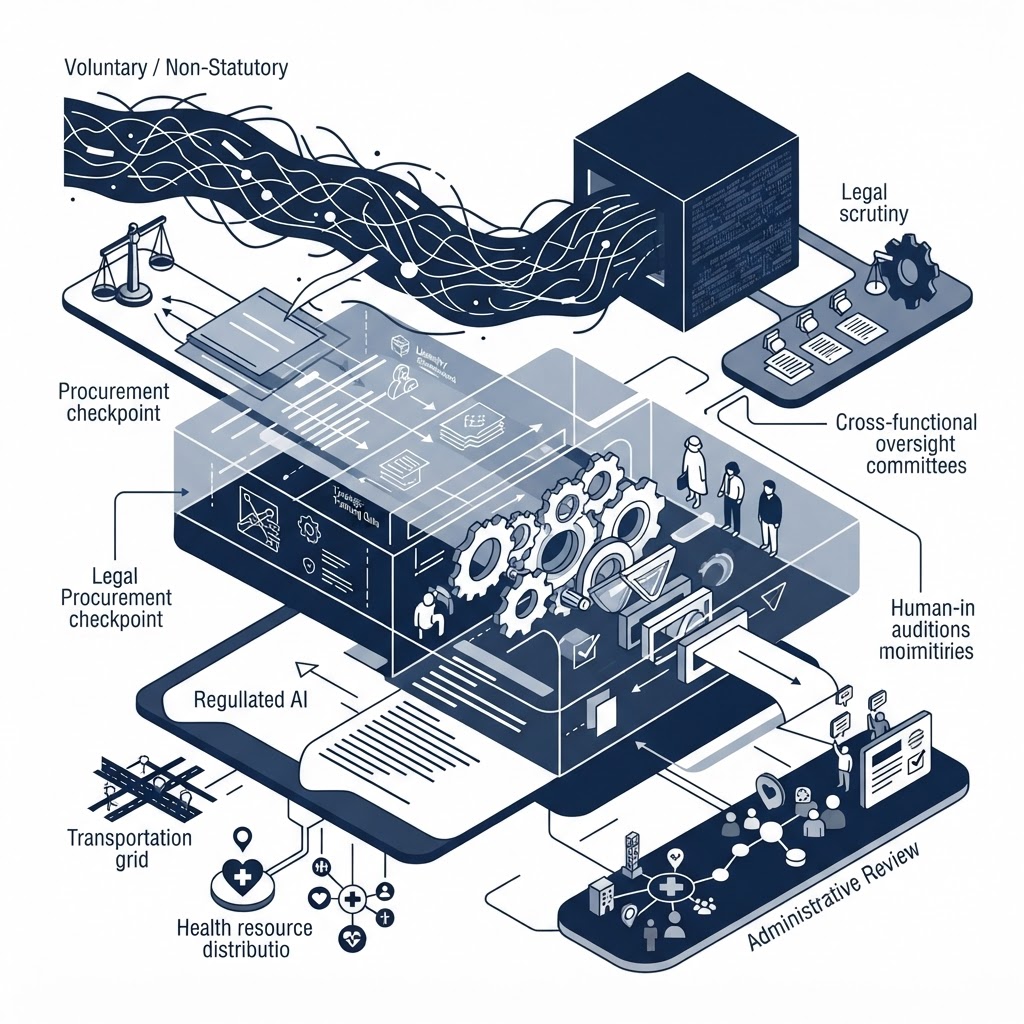
The era of voluntary, self-regulated transparency in public sector AI is rapidly sunsetting as legal scrutiny intensifies. Recent evidence presented by the Public Law Project underscores that non-statutory requirements consistently fail to produce high levels of compliance, resulting in a 'transparency gap' that masks potential civil rights violations. To rectify this, jurisdictions are pivoting toward mandatory algorithmic recording standards, forcing agencies to document the lineage, training data, and decision logic of every AI system deployed in rights-critical sectors.
This movement mirrors broader expectations found in the OECD G7 toolkit for safe, secure, and trustworthy AI, which explicitly ties the adoption of AI to the maintenance of public trust and the protection of fundamental human rights. By moving these requirements into the statute, agencies can no longer treat algorithmic governance as an elective exercise. Instead, it becomes a core component of the IT procurement lifecycle, requiring documentation that tracks how an algorithm interacts with diverse population cohorts to prevent disparate impact before the technology is ever integrated into administrative systems.
What is the most effective approach for auditing public sector AI systems for civil rights compliance?
Agencies should implement a multi-phase audit that combines internal impact assessments with independent, third-party validation of predictive models. Following the OECD G7 guidelines, organizations must prioritize 'human-in-the-loop' accountability checks, where automated outputs are regularly stress-tested against historical data to ensure that machine-learned biases do not perpetuate historical inequalities in policing, hiring, or benefits distribution processes.
Managing Risk and Institutional Integrity
The risks associated with unvetted AI go beyond mere technical error; they pose a profound threat to the legitimacy of democratic institutions. As machine-learned biases within predictive policing and automated administrative decision-making become more pervasive, the risk of litigation and loss of public trust grows exponentially. According to recent insights from the Institute for Social Research and the IBAC, integrity frameworks must now specifically account for the 'black box' nature of advanced machine learning models.
Agencies failing to implement robust algorithmic accountability are effectively operating in a high-exposure environment where a single biased output in a welfare or law enforcement tool can trigger systemic legal challenges. Effective compliance now requires integrating an 'AI Acceptable Use Policy' that dictates exactly which decisions can be automated and which require human intervention. This strategy, consistent with the NIST AI RMF, necessitates that administrators not only monitor the accuracy of the software but also audit the systemic outcomes.
By treating AI governance as a subset of broader enterprise risk management, leaders can move away from shadow AI practices and toward a culture of documented, explainable, and responsible technical deployment that withstands public scrutiny.
Driving Compliance in Municipal and State Agencies
State and local agencies must radically rethink their approach to procurement to ensure all third-party software meets the new standards for algorithmic accountability. It is no longer sufficient to accept vendor claims of 'bias-free' software; procurement teams must now demand algorithmic impact assessments as a condition of the contract. This requires an internal capacity to evaluate vendor documentation and verify that training datasets are representative of the communities served.
Furthermore, departments must move toward a centralized AI governance charter that enforces these standards across every vertical—from transportation planning to public health resource allocation. Staff training is equally critical, as the human-in-the-loop model relies heavily on the ability of caseworkers and analysts to detect and challenge anomalous algorithmic recommendations. By fostering this 'algorithmic literacy' alongside strict procurement gatekeeping, municipalities can mitigate the danger of automated exclusion.
This proactive posture allows agencies to leverage the efficiency of AI without compromising their commitment to equitable service delivery or institutional transparency.
Strategic Steps for Governance Leaders
- →Establish a mandatory, agency-wide audit trail for all software used in rights-critical decision-making. • Embed algorithmic impact assessments directly into the RFP and procurement process for all new AI investments. • Create a cross-functional oversight committee tasked with reviewing the output of autonomous systems for disparate impacts. • Train all staff in human-in-the-loop protocols to ensure human judgment supersedes biased algorithmic outputs. • Map current AI deployments against the OECD G7 toolkit to identify gaps in your current safety and security posture.
What are the primary consequences of failing to address algorithmic exclusion in public systems?
Failure to address algorithmic exclusion leads to significant legal, financial, and ethical consequences, including potential class-action litigation for civil rights violations and long-term erosion of public trust. As noted in current Brookings policy research, excluding specific populations from service access through faulty automation can invalidate entire administrative programs, resulting in mandatory remediation, oversight from independent auditors, and severe institutional reputational damage.
The adoption of robust algorithmic accountability is the most critical hurdle for public sector leaders in the modern digital age. Agencies must align their internal processes with the latest transparency frameworks to safeguard both their operations and their standing with the public. Future institutional legitimacy will depend entirely on a commitment to bias-free, transparent, and legally defensible automated systems.
Tagged
About APEX AI Guardrails: We publish expert AI news and governance insights updated 4× daily. Our editorial team consists of retired government IT professionals, AI governance specialists, and compliance experts with deep experience in local government operations.